
The Stinking Passionflower: Passiflora foetida and Its Global Healing Legacy
, by Austin Parker, 6 min reading time
, by Austin Parker, 6 min reading time
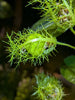
The name isn't exactly flattering. Passiflora foetida — the stinking passionflower, bushpassion fruit, or locally in India, jhumka lata — carries that "foetida" tag because of itsdistinctly unpleasant smell. The plant itself is unassuming: a climbing herbaceousperennial with sticky leaves and small flowers. It doesn't announce itself as medicine. Butacross three continents and centuries of use, people have reached for it anyway, learningto look past the smell to what the plant could actually do.
The Stinking Passionflower: Passiflora foetida and Its Global Healing Legacy
The name isn't exactly flattering. Passiflora foetida — the stinking passionflower, bush
passion fruit, or locally in India, jhumka lata — carries that "foetida" tag because of its
distinctly unpleasant smell. The plant itself is unassuming: a climbing herbaceous
perennial with sticky leaves and small flowers. It doesn't announce itself as medicine. But
across three continents and centuries of use, people have reached for it anyway, learning
to look past the smell to what the plant could actually do.
Colonial Records and Ancient Practice
Passiflora foetida appears in colonial botanical records dating back to the 18th century,
when European explorers in the Americas first documented indigenous uses and brought
specimens back to the Old World. But this wasn't a plant that needed European validation
to matter. It has been used in traditional medicine for centuries, with applications
documented across South America, Asia, and India — each region discovering
independently what the plant could treat.
The Nervous System Focus
If one pattern emerges across the ethnobotanical record for P. foetida, it's the nervous
system. Leaves are used to treat asthma and hysteria, and in Vietnam, the plant found a
particular niche. Leaves are used for tea making to address sleeping problems — a use
that speaks to the plant's reputation as a calming agent. The connection makes sense:
many Passiflora species contain alkaloids and flavonoids that interact with the nervous
system, and P. foetida is no exception.
Skin and Inflammation
The plant's applications weren't limited to internal use. In Brazil, Passiflora foetida is used
to formulate lotions for skin diseases with inflammation — a topical application that
suggests healers understood something about the plant's anti-inflammatory potential that
modern research is still working to quantify. The sticky leaves themselves, with their
adhesive properties, may have made them particularly suitable for poultices and external
preparations.
Regional Specificity: Sri Lanka
The ethnobotanical story of P. foetida includes one particularly interesting regional
context. In Sri Lanka, Passiflora foetida (locally known as Padagedi) is identified as an
underutilized fruit used in traditional medicine for several diseases. "Underutilized" is a
telling word — it suggests a plant with deep cultural roots and practical applications that's
somehow been overlooked by modern medicine and commerce, despite its long history of
use.
Scientific Validation
Modern research has begun catching up to traditional knowledge. The rich chemical
composition of Passiflora species predetermines their diverse applications in treating
insomnia, anxiety, epilepsy, and asthma, and P. foetida shares many of these compounds
with its better-known relatives. Studies have documented antibacterial properties and
Phytochemical compounds that support traditional medicinal uses.
The Ciliated Passionflower: Passiflora ciliata and the Quieter Passions
Where Passiflora foetida is known for its smell, Passiflora ciliata carries the quieter
reputation of its genus — calming, sedative, a plant for the nervous system and sleepless
nights. The species name ciliata refers to the hair-like structures (cilia) on its leaves, but
what matters more is what healers across centuries discovered this plant could do.
The Genus Legacy
Before we talk about P. ciliata specifically, it's worth understanding the broader Passiflora
story. For centuries, passionflower was revered for its calming and sedative properties,
traditionally used in rituals and as a natural remedy — a reputation that applies across the
entire genus. The vines, leaves, and flowers all carry medicinal potential, and they've been
used for circular thinking, anxiety, and insomnia.
European and Eastern Traditions
Passiflora ciliata has been used as a natural medicine for the treatment of insomnia and
anxiety for a long time in Europe, and has been used primarily for sedation tea. This isn't a
recent discovery or a trend. It's embedded in centuries of European folk medicine, where
passionflower became one of the standard remedies for restlessness and nervous tension. The Eastern tradition runs parallel. In Vietnamese folk medicine, dry leaf is used as tea to relieve sleeping problems, as well as treatment for itching and coughs, suggesting that different cultures, working independently with related Passiflora species, arrived at similar conclusions about the plant's properties.
Practical Applications
The traditional preparations are straightforward and speak to how accessible the plant is.
Herbal tea made from the aerial part was believed to calm the nerves, and the pulverised root, infused in water, was used for weaning children and for ear infections — uses that span everything from anxiety to pediatric care to infection management.
In Brazil and Mauritius, traditional practices involve using the fruit as a sedative against
Insomnia and an anxiety-reducer, with stems and leaves also employed medicinally. The
Consistency across geographies and centuries suggests that P. ciliata and related species
genuinely offer something — not a miracle cure, but a reliable, gentle effect on the nervous
system.
The Broader Passion Fruit Family
What's interesting about P. ciliata is that it exists within a larger genus of about 520
species, many of which have been used medicinally. The genus Passiflora has long been
used in traditional herbal medicine across both Eastern and Western cultures, and
individual species like P. ciliata carry forward that legacy while developing their own
regional and cultural contexts.
Both species represent something important about ethnobotany: plants that work quietly,
that don't demand attention through exotic properties or dramatic effects, but that have
earned the trust of healers across centuries and continents through consistent, reliable
action. They're the kind of plants that get passed down through families and communities
not because they're exciting, but because they work.